

We are incredibly grateful to everyone who volunteers for Operation Turtle Dove – their dedication and passion help us to achieve more. So, it’s always heartening to hear from those who so generously give their time, about the difference it makes to their lives too.
This summer, father-and-son James and Reece Clissold-Bate have been part of a new Trail Camera team of volunteers helping to monitor Turtle Dove around their home patch in Cambridge.
It might not be immediately obvious how a trail camera can help us boost Turtle Dove numbers, but they’re becoming an incredibly helpful tool when it comes to seeing where our work is making the biggest impact.
Cameras allow us to have ‘eyes’ in more places, around the clock, and without causing any disturbance to birds.
James was keen to do more conservation volunteering which he can fit around his work as a mechanical design engineer – he already does farmland bird surveying for the RSPB.
So, hearing that Bethany Tomlinson, RSPB Conservation Officer for Cambridgeshire, Bedfordshire and Hertfordshire and a Turtle Dove adviser, was looking to recruit a team of volunteers for her new trail cam project sounded like a great fit.
“I was already doing farmland bird surveying first thing in the morning before work, so this sounded like something else I could slot in around my working day,” said James.
The fact his teenage son Reece was also keen to take on some volunteering as part of his Duke of Edinburgh award made it even better.
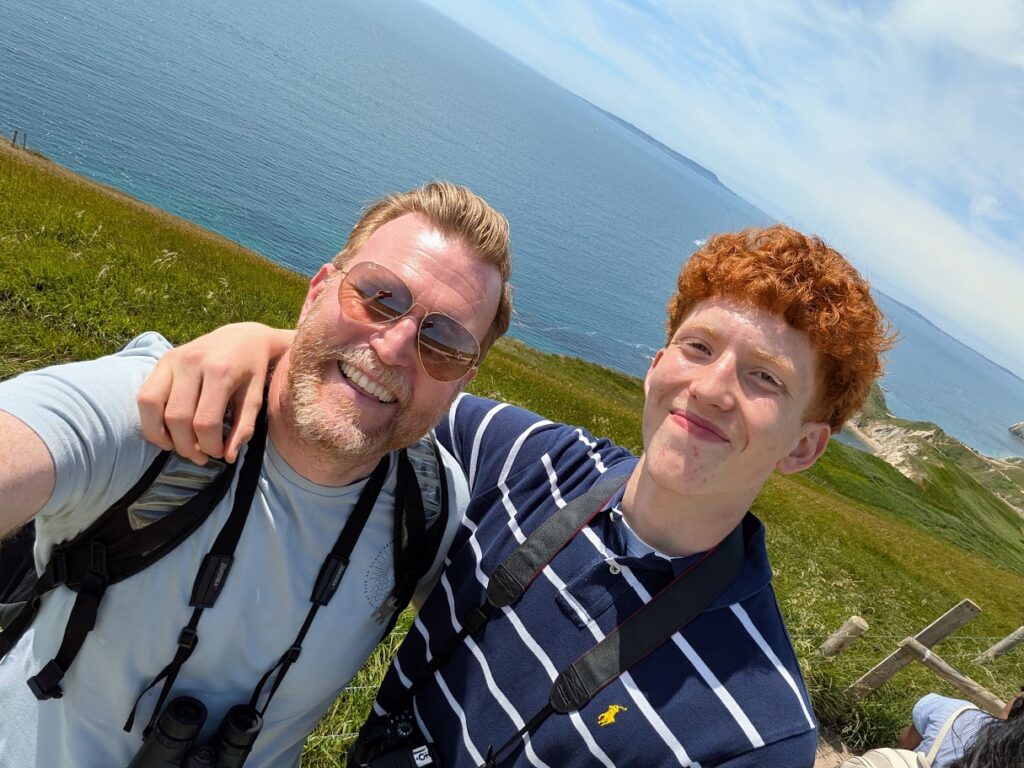
“Being able to do this volunteering with Reece has been a real highlight for me,” explained James. “I wasn’t sure how he’d find it – if looking through camera images to find Turtle Doves might be a bit boring for him, but he’s really enjoyed it. He’s still never seen a Turtle Dove in real life, but he’ll certainly recognise one when he does!”
That’s because the pair looked through thousands of images as part of their volunteering roles, constantly scanning for a glimpse of the beautiful intricate wing patterns that would indicate they had recorded a dove on the patch.
Bethany explained that the project relied on the volunteers speaking to landowners who had carried out work to make their sites attractive to Turtle Dove, finding the best places to site cameras, and then collecting the evidence at the end of each week to look for any evidence of the birds.
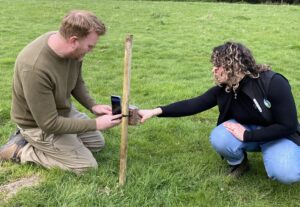
“It’s important to be able to keep track of where landowners have put effort into their sites to make them dove-friendly, to see if it’s being successful,” explained Bethany.
“They can’t always be on site and looking out for the birds themselves, so this volunteer-led project allows us to try and find where the efforts to attract Turtle Dove have been successful – where they are feeding, and any evidence of breeding by looking for juvenile birds.
“It takes a great amount of dedication – the typical number of images recorded at a site are usually in the thousands, as the cameras are triggered by any movements – so vegetation and other animals will all be captured, and the images then need to be trawled through!”
“It’s difficult to say how many hours we’ve spent going through photos,” says James. “The hope is always to capture Turtle Dove activity and see where they may have good nesting or foraging habitat.”
James and Reece were lucky enough to record Turtle Doves in around 170 of the images they captured, alongside some close-up of deer noses, startled Pheasants to many, many images of swaying grass!
“I really enjoyed learning more about identifying birds – of course, it wasn’t just Turtle Doves we were recording,” said Reece. And overall, this evidence was also important to the project.
The team’s cameras captured images of twenty-eight different species, including Red-listed and Amber-listed farmland birds such as Corn Bunting, Greenfinch, Linnet, Yellowhammer and Stock Dove.
The results show that a wide range of species benefit from conservation measures and give encouragement to farmers, landowners and everyone working to help Turtle Doves that their efforts are valuable to not only these iconic migratory birds, but many others as well.
“Getting this kind of data is vital for us to ensure we’re putting our efforts into the right places – and with the support of our incredible volunteers, spurs us all on to achieve even more,” said Bethany.
To find out more about volunteering, contact the team.
There are many other ways to support the work, including donating to our Turtle Dove fundraising campaign.